Sonntag, 12. Oktober 2014

Light Rain

Light Rain

Blazing summer days: no force could bring them back.
Clouds suddenly rising off the river, lovely, so lovely,

ducks leave a bridge's shadow, paddling into fine rain,
and butterflies flutter out, frolicking in field breezes.

The willow won't survive nights and days much longer,
and waterlilies will only open two or three more times.

If the changing sights of a single year haunt your eye,
why wonder that a palace lake is ash among the kalpas ?

Lu Yu

'Light Rain' from 'Mountain Home: The wilderness poetry of ancient China', translated by David Hinton.

Linji Yixuan


If you love the sacred and despise the ordinary, you are still bobbing in the sea of delusion … Because you grasp labels and slogans, you are hindered by those labels and slogans, both those used in ordinary life and those considered sacred. Thus they obstruct your perception of objective truth, and you cannot understand clearly.


„Wenn ihr Buddha trefft, tötet Buddha […] dann erlangt ihr zum ersten Mal Befreiung, werdet nicht mehr von Dingen gefesselt und durchdringt alles frei.“


Freitag, 22. August 2014

Daoist meditation


Daoist Neijing Tu diagram of a neidan meditator's body as a microcosm of nature

If you can be aligned and be tranquil,
Only then can you be stable.
With a stable mind at your core,
With the eyes and ears acute and clear,
And with the four limbs firm and fixed,
You can thereby make a lodging place for the vital essence.
The vital essence: it is the essence of the vital energy.
When the vital energy is guided, it [the vital essence] is generated,
But when it is generated, there is thought,
When there is thought, there is knowledge,
But when there is knowledge, then you must stop.
Whenever the forms of the mind have excessive knowledge,  then you must stop.
Whenever the forms of the mind have excessive knowledge, You lose your vitality.
(tr. Roth 1999:60) source & more

Neokonfuzianismus

Darstellung eines Bagua von Zhu Xi || Mono-, Di- and Trigrams as from Zhū Xī (朱熹) in Zhōuyì zhèngyì (周易正義) white square means and black square means

Der Neokonfuzianismus ist eine religiös-philosophische Lehre, die während der chinesischen Song-Dynastie entstand und deren Ursprünge im Konfuzianismus liegen, die jedoch auch starke Einflüsse aus Buddhismus und Daoismus aufweist. Der Neokonfuzianismus war ab der Song-Dynastie eine der beherrschenden und kulturell einflussreichen Geistesströmungen in China.

In der chinesischen Sprache gibt es diesen Begriff nicht, dort wird diese Lehre z. B. Songxue (chinesisch 宋學 / 宋学, Pinyin sòngxué ‚Song-Lehre‘), Lixue (理學 / 理学, lǐxué ‚Lehre vom Prinzip‘) oder Xinli Xue (心理學 / 心理学, xīnlǐxué ‚Lehre vom Prinzip und vom Herzen‘) genannt. 

Auf Koreanisch wird der Neokonfuzianismus Seongrihak (성리학 性理學 [səŋrihak]) genannt.

Die Begriffe, die bei den verschiedenen neokonfuzianischen Philosophen eine Rolle spielen, und im nachfolgenden erläutert werden, waren zwar alle schon in der älteren chinesischen Philosophie vorhanden, erfuhren aber im Neokonfuzianismus eine neue Gewichtung und Ausdeutung. source & more

Peace


When I'm at peace I let everything go

I wake by the east window long after sunrise

viewed without passion everything is fine
seasonal glories hold true for man
the Tao fills the world the formed the formless
our thoughts are in the ever-changing wind and clouds
not troubled by wealth content in poverty
the person who reaches this is truly noble


From: 'Poems of the Masters: China's Classic Anthology of T'ang and Sung Dynasty Verse'. Translated by Red Pine. Copper Canyon Press

Freitag, 18. Juli 2014

Montag, 14. Juli 2014

[2] Der westliche und der östliche Weg

Meister Eckhart
[...] Eckhart zeigt eine erstaunliche Nähe zur indischen Denkart. Passagen und viele einzelne Sätze lesen sich wie eine Übersetzung unmittelbar aus dem Sanskrit. Damit soll natürlich nicht der Eindruck erweckt werden, in Eckharts Schriften seien irgendwelche indische Elemente tatsächlich vorhanden, obschon es einige orientalische Einflüsse in der europäischen Tradition gibt, die aus neu-platonischen und arabischen Quellen stammen.

Was der Vergleich vielmehr beweist, das ist nicht der Einfluss eines Denksystems auf ein anderes, sondern der Zusammenhang der metaphysischen Überlieferung der ganzen Welt und aller Zeiten.[...]


Quelle: Der westliche und der östliche Weg, Weltperspektiven, Essays über christliche und buddhistische Mystik | Erster Teil - Kapitel Meister Eckhart und der Buddhismus- Seite 22 || D.T. Suzuki

Knowledge

source


However deep your 
Knowledge of the scriptures,
It is no more than a strand of hair
In the vastness of space;
However important appears
Your worldly experience,
It is but a drop of water in a deep ravine.
Tokusan

Samstag, 12. Juli 2014

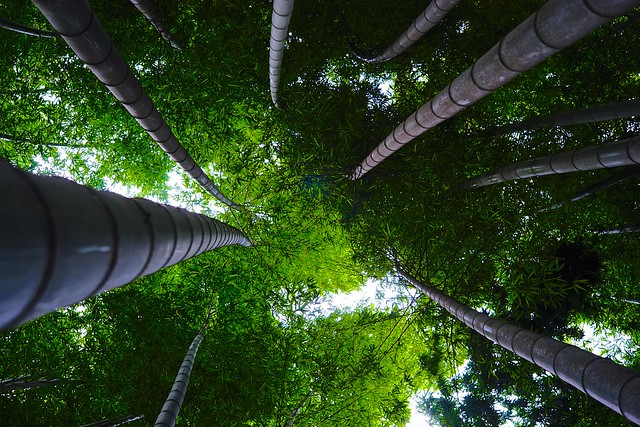
In the bamboo forest

In the bamboo forest

 East & West or "The Synthese"

Melodrama

source

Han Shan spits out these words,
words no one believes ...


Honey's sweet, so people love it,
But the best herbs are bitter, hard to get down.
Go along, and they'll all love you.
Oppose them, and you'll get a big-eyed stare.
All I see is wooden puppets,
playing out their melodrama.


Han Shan Cold Mountain | Translated by J.P. Seaton

Dienstag, 8. Juli 2014

Water does not think ...


To each thing, its own
true deepest inner nature:
water does not think
of itself as consort
of the bright moonlight it hosts.


Sogi

from 'The Poetry of Zen' translated by Sam Hamill

Sonntag, 26. Januar 2014

ZEN

ZEN by ░S░i░l░a░n░d░i░
ZEN, a photo by ░S░i░l░a░n░d░i░ on Flickr.


How long does it take? 

A young man went to see a Zen master. 'Master, how long will it take until I have attained liberation?'

'Maybe ten years' replied the master.

'And if I am particularly make an effort, how long does it take?', Asked the students.

'In that case, it may be twenty Jahre "replied the master.
'But I take really any hardship on me. I want to go as quickly as possible to your destination ', protested the young man.


'Then,' replied the master, 'it may take up to forty years.'

Montag, 23. Dezember 2013

Traditionelle Chinesische Medizin || Der Gelbe Kaiser


Der gelbe Kaiser

Die chinesische Medizin ist eine komplexe Form von Lehren, die vor ungefähr 10.000 Jahren im fernen Osten ihren Ursprung nahmen und sich seitdem kontinuierlich weiterentwickelt haben. Die Inhalte der chinesischen Medizin wurden schriftlich erstmals um 2000 v. Chr. festgelegt. 

Die Kernelemente der chinesischen Medizin stammen aus dem Buddhismus, Konfuzianismus und Taoismus, wobei der Taoismus den größten Einfluss hatte. Yin & Yang, die fünf Elemente und Qi entspringen dem Taoismus und sind die führenden Prinzipien in der chinesischen Medizin. 

Der menschliche Körper bildet mit seinen Organen und den unzähligen Energiebahnen, den sogenannten Meridianen, eine Einheit, die für den Gesundheitszustand und der Lebenserwartung eines Menschen eine entscheidende Rolle spielt. 

Ziel eines jeden Menschen sollte es sein, diese Einheit, und somit seine Gesundheit, zu bewahren, um ein glückliches und ausgeglichenes Leben führen zu können. Die chinesische Medizin beschäftigt sich nun mit diversen Praktiken zur Erhaltung dieser Einheit.

weiterLesen:  DongXi - TCM

Sonntag, 24. November 2013

Intoxicated Dream

Months pass, days pile up,
like one intoxicated dream -
An old man sighs.


Ryokan

Flow


Ursprünglich hochgeladen von ░S░i░l░a░n░d░i░


Let my natural flow
Left without the least bit of ambition
I let my natural flow
where they want to go.
There are rice for ten days
in my pocket
and next to the stove
a bunch of firewood.
Who chatters because of illusion or nirvana?
I forget the same meaningless dust
a good name and wealth,
and while I listen to the night's rain,
as he pattered on the roof of my hut,
I sit relaxed
both legs extended.


Ryokan

Freitag, 18. Oktober 2013

MindWind


Ursprünglich hochgeladen von ░S░i░l░a░n░d░i░


Meister Hogen sagte zu einem Mönch: "Sieh dir diesen Felsbrocken an. Ist er in deinem Geist oder außerhalb?"

Der Mönch antwortete: "Nach der buddhistischen Lehre ist alles Projektion des Geistes, also nehme ich an, daß er in meinem Geiste ist."

Hogen sagte: "Ist es nicht beschwerlich, solch einen schweren Stein mit dir herumzuschleppen?"

Aus dem Zen-Buddhismus
Quelle: Das Zen entstand im 6./7. Jahrhundert in China aus Meditationsbuddhismus und Taoismus


Samstag, 1. Juni 2013

Where did you come from? - Where are you going?


Where did you come from? - Where are you going?
Ursprünglich hochgeladen von ░S░i░l░a░n░d░i░


✿ Lotus ✿

Everywhere in Asia can be found in small ponds or lakes or the lotus Lotus. From time immemorial, it is a symbol of purity and flourish.

His flawless flower is the product of mud and sludge -
out of the mud grows the lotus.

She needs the dirt of dead particles, eg of fish or frog waste - figuratively speaking: from our past (our family / ancestors, our culture) - it does not grow well on the soil. The older and dead / musty the mud, the better it grows. The lotus flower gives us courage to found our abysmal.

From the muddy ground of the lotus bud goes into the water and strives for light and heat.

When the Lotus has said "yes" to his roots in the mud, he gets a strong stem. The stem meanders move first through murky water, then by ever clearer water, he can in this case the water flows - the stalks growing in the unstable area of ​​the water inside (water symbolizes emotions) and is thrown back and forth. He can because he has a solid ground of by being firmly rooted.